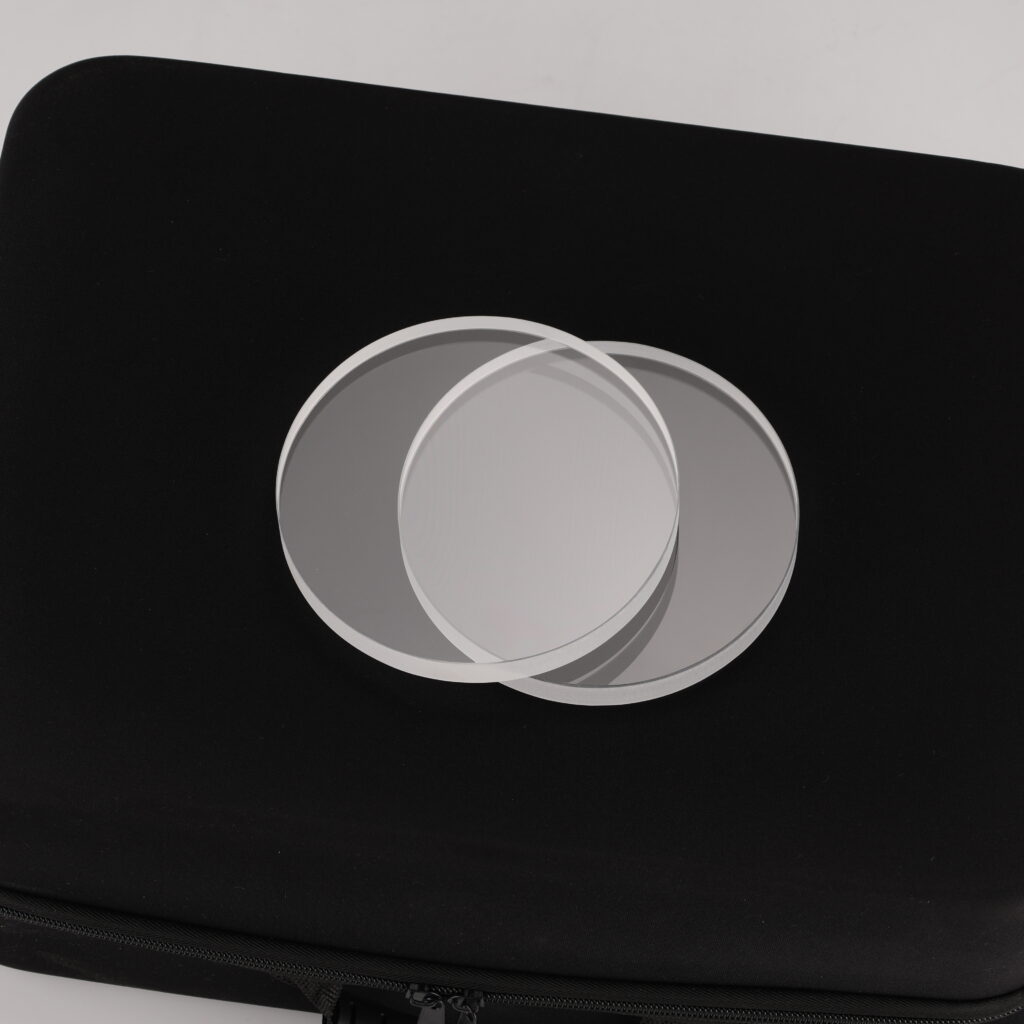
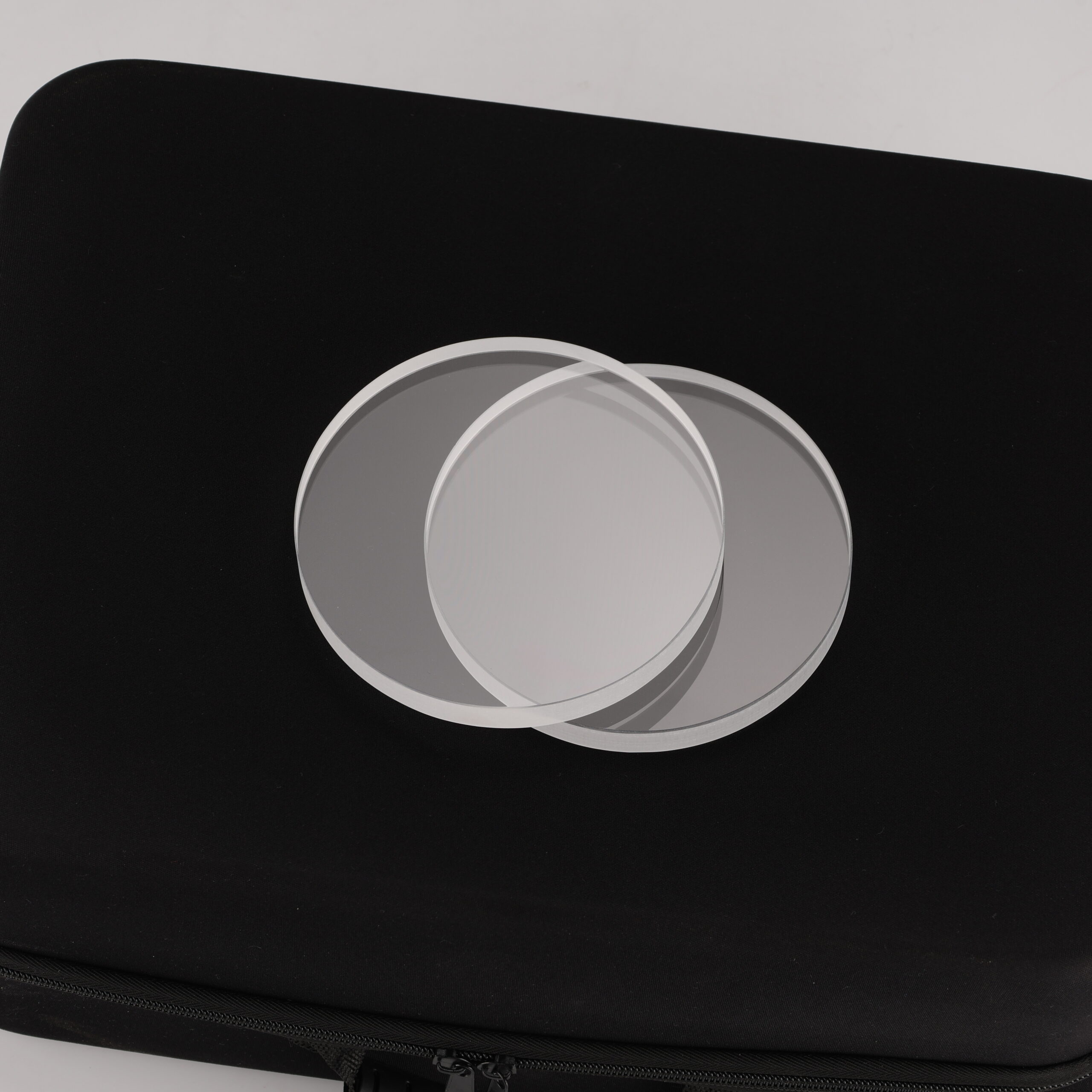

Comparison table for JGS1, JGS2, and JGS3 fused silica
| Parameter/Model | JGS1 (Far UV) | JGS2 (UV) | JGS3 (IR) |
|---|---|---|---|
| Spectral Range | 185–2500 nm | 220–2500 nm | 260–3500 nm |
| UV Transmittance | >80% at 185 nm | >90% at 220 nm | Not applicable |
| Visible Light Transmittance | >90% | >90% | >90% |
| IR Transmittance | General | General | Excellent (260–3500 nm) |
| Thermal Stability | High (withstands 1730°C) | High (withstands 1730°C) | High (withstands 1730°C) |
| Mechanical Strength | High (Mohs hardness 6.5–7) | High (Mohs hardness 7) | High (Mohs hardness 7) |
Application Scenarios and Selection Recommendations of JGS1, JGS2, and JGS3 fused silica
- JGS1: Suitable for UV optical systems, such as UV spectrophotometers and UV laser windows, where high performance in the 185–2500 nm range is required.
- JGS2: Ideal for visible and near-infrared applications, such as microscopes, telescopes, and camera lenses, offering a cost-effective and versatile solution.
- JGS3: Designed for infrared optical systems, such as infrared imaging devices and thermal imagers, where high infrared transmittance is critical.