

Material Selection Guide: Choosing the right grade is critical for UV/IR performance.
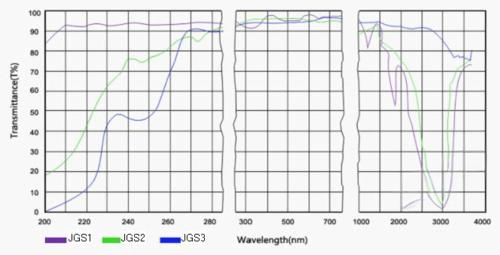
Compare JGS1 vs. JGS2 vs. JGS3 properties here
(Transmission, OH Content, and Applications).
JGS1 Fused Silica Guide: Optical Properties, UV Transmission, and Applications
At a Glance: JGS1 is a high-purity synthetic fused silica (185nm-2500nm) characterized by high UV transparency, zero bubbles, and exceptional thermal stability. Unlike JGS2, JGS1 is specifically designed for superior performance in deep ultraviolet (DUV) applications, making it the industry standard for precision laser windows and high-end optical sensors.
Unlike JGS2, JGS1 is a high-purity synthetic fused silica designed for superior deep UV performance.
1. Material Overview
- Composition: JGS1 is a high-purity fused silica (SiO₂ > 99.99%) with a low hydroxyl content (<10 ppm), making it ideal for ultraviolet (UV) applications.
- Form: Non-crystalline (amorphous) glass with a homogeneous structure.
- Key Properties:
- Transmittance: Excellent from 185 nm to 2500 nm (UV to near-infrared), with minimal absorption in the deep UV range (185–250 nm).
- Thermal Stability: Low thermal expansion coefficient (≈0.55 × 10⁻⁶/K at 20–1000°C), resistant to thermal shock.
- Chemical Resistance: Inert to most acids and alkalis, suitable for harsh environments.
- Mechanical Strength: High hardness (≈6.5 Mohs) and fracture toughness.
- Electrical Properties: Low dielectric loss and high insulation resistance.
2. Optical Characteristics
- UV Transmittance: >90% at 185 nm, >85% at 200 nm, and >80% at 250 nm.
- Infrared Cutoff: ~2500 nm due to Si-O-Si bond vibrations.
- Refractive Index: ≈1.4585 at 589.3 nm (Na D-line), with low dispersion.
- Birefringence: <1 nm/cm (minimal optical distortion).
3. Thermal Properties
- Melting Point: ~1700°C (softening point: 1730°C).
- Operating Temperature Range: -50°C to 1200°C (short-term up to 1250°C).
- Thermal Conductivity: ~1.38 W/(m·K) at 20°C.
- Heat Capacity: ≈0.774 J/(g·K).
4. Physical Properties
- Density: ≈2.2 g/cm³.
- Young’s Modulus: ≈72 GPa.
- Poisson’s Ratio: ≈0.17.
- Surface Hardness: ≈550–600 HV (Vickers).
5. Chemical Resistance
- Acid Resistance: Resistant to HF, HCl, H₂SO₄, and HNO₃ at room temperature.
- Alkali Resistance: Resistant to NaOH and KOH solutions (except at high concentrations or temperatures).
- Solvent Resistance: Inert to organic solvents and water.
6. Applications
- UV Optics: Lenses, windows, prisms, and filters for UV spectroscopy and lithography.
- High-Temperature Environments: Furnace windows, observation ports, and thermal shields.
- Semiconductor Industry: Wafer carriers, diffusion tubes, and plasma etching chambers.
- Medical Devices: UV sterilization components and surgical instruments.
- Laser Systems: High-power laser windows and mirrors.
7. Customization Options
- Sizes: Available in standard dimensions (e.g., 10 mm × 10 mm × 2 mm) or custom-cut to specifications.
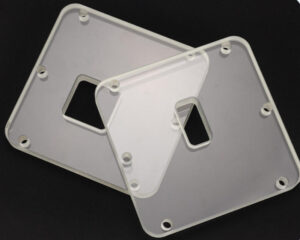
- Shapes: Plates, discs, rods, tubes, or complex geometries.
- Surface Finish: Polished to λ/10 or better for optical-grade surfaces.
- Tolerances: ±0.1 mm for thickness, ±0.5° for angles.
8. Quality Assurance
- Standards: Meets ISO 9001 and ASTM E490 for optical materials.
- Testing: Includes transmittance, surface quality, and dimensional accuracy checks.
- Certifications: CE, RoHS, and REACH compliant.
9. Handling & Storage
- Precautions: Avoid contact with HF or concentrated alkalis; use cleanroom gloves for handling.
- Storage: Keep in dry, dust-free environments to prevent surface contamination.
10. Comparison with Other Grades
- vs. JGS2: JGS2 has higher hydroxyl content (~220 ppm), reducing UV transmittance below 200 nm but improving IR performance.
- vs. JGS3: JGS3 is designed for IR applications (transparent up to 3500 nm).
Key Technical Advantages of Youjia JGS1 Material:
-
Broad Transmission Spectrum: Optimized for 185nm to 2500nm, covering UV, Visible, and Near-IR.
-
Extreme High Purity: Synthetic manufacturing ensures no inclusions or bubbles, preventing light scattering.
-
Low Thermal Expansion: Maintains optical precision in high-power laser environments or extreme temperature shifts.
-
B2B Industrial Applications: Widely used in semiconductor lithography, UV sterilization systems, and drone obstacle avoidance lenses.
Frequently Asked Questions (FAQ):
-
Q: What is the main difference between JGS1 and JGS2?
-
A: JGS1 is synthetic fused silica with the highest UV transparency (185-2500nm), whereas JGS2 is melted fused quartz best suited for visible light (220-2500nm). JGS1 is the preferred choice for deep UV and high-precision laser applications.
-
-
Q: Is JGS1 suitable for high-temperature environments?
-
A: Yes, JGS1 can withstand continuous operating temperatures of up to 1000°C and maintains excellent chemical resistance and thermal shock stability.
-
-
Q: Can I get custom-sized JGS1 windows from Youjia Optical?
-
A: Absolutely. We provide custom JGS1 fused silica components with specialized coatings (AR, AF) tailored for drone lenses and industrial sensors.
-

评价
目前还没有评价